Source Latex Balloon for Parties, Weddings, and Festivals
Explore 30 latex balloon options from Hebei and Hubei, China. Buyers can compare specifications including sizes from 3 to 18 inches, materials like 100% non-toxic natural latex, and finishes such as metallic or fluorescent for various occasions.
Key considerations
Products List




Comprehensive Sourcing Guide
Strategic Sourcing Guide for Latex Balloons in Global Procurement
The global market for latex balloons represents a dynamic sector where aesthetic versatility meets functional utility, serving industries ranging from event management to promotional marketing. For procurement professionals, sourcing latex balloons requires a nuanced understanding of material science, regulatory compliance, and supply chain logistics. The product category encompasses a wide array of variations, including standard round balloons, link balloons, printing balloons, and specialized water balloons. Buyers must navigate a landscape defined by diverse specifications, from material composition to packaging standards, to ensure that the selected products align with both operational needs and safety regulations. This guide provides a structured approach to evaluating latex balloon suppliers, focusing on technical attributes, compliance verification, and cost optimization strategies derived from current market observations.
Technical Specifications and Material Composition
The foundation of any latex balloon procurement strategy lies in a precise understanding of technical specifications. The primary material identified in the market is 100% non-toxic natural latex, which is widely recognized for its environmental friendliness and elasticity. This material composition is critical for applications involving direct human contact, such as children's parties or water games. The physical dimensions of the balloons vary significantly, with standard sizes ranging from 3 inches to 18 inches. Specific weight metrics are also observable, with individual balloon weights recorded in ranges such as 1.3g to 3.2g for standard variants, and specialized water balloons weighing between 0.11g and 0.24g depending on the diameter.
Surface finish and printing capabilities are equally important technical differentiators. The market offers finishes including standard, crystal, metallic, fluorescent, and pearlized options. Printing specifications allow for one-color or multi-color applications on one or two sides of the balloon, enabling high customization for branding purposes. The shape of the product is not limited to the traditional round form; the category includes heart-shaped, animal-shaped, spiral, and twisty designs. Furthermore, the "Link Balloon" and "Printing Balloon" sub-categories indicate specialized manufacturing processes where balloons are connected or pre-printed for specific decorative effects. Buyers should verify that the supplier's production capabilities match the required shape and finish specifications, as these attributes directly influence the visual impact and functional utility of the final product.
Compliance, Certification, and Safety Standards
Safety and regulatory compliance are paramount when sourcing latex products, particularly those intended for use in festivals, carnivals, or children's events. The supplied data indicates that certain products adhere to standards such as ISO, CE, and SGS. These certifications suggest that the manufacturing processes have undergone third-party verification for quality and safety. Specifically, the product attributes highlight that balloons are phthalate-free, harmless, and contain low cadmium levels, ensuring they do not pose pollution risks or health hazards.
However, buyers must exercise caution when interpreting certification claims. While the data mentions ISO, CE, and SGS, it does not explicitly confirm compliance with specific international toy safety standards like ASTM F963 or EN 71 series (EN 71-1, EN 71-2, EN 71-3) for every listed product. The presence of these standards in background knowledge does not guarantee that a specific supplier's inventory meets them. Therefore, procurement teams should request current, valid test reports from suppliers to confirm that the specific batch of latex balloons complies with the safety regulations of the destination market. For products destined for the European Union, verifying EN 71 compliance is essential, while North American markets may require adherence to ASTM standards. The absence of explicit certification data for a specific SKU should not be assumed as a failure, but rather as a requirement for further due diligence before finalizing a purchase order.
Cost Drivers and Pricing Dynamics
Understanding the cost structure of latex balloons is essential for budgeting and negotiation. The observed price range in the market spans from $0.01 to $5.00 USD, a wide variance that reflects differences in size, material quality, printing complexity, and packaging. Several factors drive these costs. First, the material weight and size are primary cost determinants; larger balloons or those with higher latex content (e.g., 3.2g vs. 1.3g) naturally incur higher material costs. Second, the printing process adds significant value; multi-color printing on both sides requires more complex machinery and ink usage compared to single-color or unprinted variants.
Packaging also influences the unit cost. Standard packaging is observed as 50 pieces per OPP bag, while other configurations include 100 pieces per bag with bulk cartons containing 30,000 pieces. The complexity of the packaging, such as custom branding on the OPP bags or specialized cartons for link balloons, can increase the overall price. Additionally, the Minimum Order Quantity (MOQ) plays a crucial role in unit pricing. The market observes MOQs ranging from 10 pieces to 20,000 pieces. Buyers purchasing near the lower end of the MOQ spectrum may face higher per-unit costs, whereas bulk orders often benefit from economies of scale. It is vital to analyze the total landed cost, including shipping and duties, rather than focusing solely on the ex-works price, as the low unit price of $0.01 may not be sustainable for small-volume orders due to fixed logistics costs.
Typical Applications and Market Segmentation
Latex balloons serve a diverse range of applications, driving demand across multiple market segments. The primary usage categories include gifts, promotions, advertisements, weddings, carnivals, birthdays, Christmas, New Year, and anniversaries. The "Holiday Party" and "Western Style" attributes suggest a strong alignment with seasonal and cultural celebrations. Furthermore, specialized applications such as water bomb fights and summer games require specific product variants, such as water balloons with precise weight and size tolerances to ensure safety and performance during play.
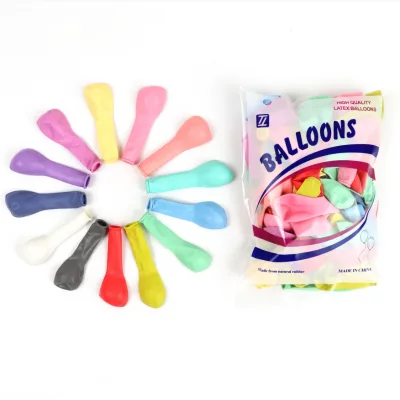
The destination of the product is also a key consideration. Balloons are utilized for festivals, carnival favors, and entertainment purposes, indicating a need for durability and vibrant colors. The color palette available includes pink, yellow, brown, blue, green, white, and purple, with the option for "many colors" or "all colors" depending on the supplier's inventory. Buyers should match the product attributes to the specific occasion; for instance, a wedding may require elegant pearlized or metallic finishes, while a summer water game requires standard, durable latex with specific weight specifications. Understanding the end-use scenario allows procurement teams to select the correct product type, whether it be a common balloon, a link balloon for arches, or a specialized water balloon, ensuring the product meets the functional requirements of the event.
Supplier Evaluation and Operational Capabilities
Evaluating potential suppliers requires a focus on their operational capabilities, geographic location, and flexibility. The data indicates that production origins include Hebei and Hubei in China, regions known for their manufacturing infrastructure. Buyers should verify the supplier's ability to handle OEM (Original Equipment Manufacturer) requests, as the market data confirms that OEM is acceptable. This capability is crucial for companies seeking custom branding or specific product modifications.
Lead times are another critical factor in supplier selection. The observed delivery time ranges from 5 to 7 days, which suggests a relatively agile supply chain for standard orders. However, buyers must confirm if this lead time applies to customized orders or if it is specific to stock items. Customization, including specific shapes, colors, and printing, may extend production times. The ability to customize shapes (round, heart, animal, etc.) and finishes (standard, crystal, metallic) indicates a versatile manufacturing process. When evaluating suppliers, procurement teams should assess their capacity to handle large volume orders, given the high-end MOQ of 20,000 pieces observed in the market. A supplier's ability to scale production while maintaining quality consistency is a key indicator of reliability. Additionally, the "All Over The World" market reach suggests that experienced suppliers have the logistics network to handle international shipping, but buyers should still verify shipping terms and reliability.
Quality Control and Long-Term Procurement Strategy
Implementing a robust quality control (QC) strategy is essential for mitigating risks associated with latex balloon procurement. Given the variability in material weight and size, buyers should establish clear acceptance criteria based on the observed specifications. For example, water balloons must meet specific weight and diameter tolerances (e.g., 0.11g to 0.24g for 3" to 5.5cm sizes) to ensure they function correctly during games. For standard balloons, verifying the absence of defects such as pinholes, uneven coloring, or weak elasticity is critical.
Long-term procurement considerations involve building a sustainable relationship with suppliers who can consistently deliver high-quality products. The availability of customization and the range of product models (TKDE031, WH-BLN, Link Balloon, Printing Balloon) suggest that a strategic partnership can yield significant benefits. Buyers should consider the environmental impact of their procurement, favoring suppliers who use 100% non-toxic natural latex and adhere to low-cadmium standards. Furthermore, the flexibility in packaging, from small OPP bags to bulk cartons, allows for efficient inventory management. By maintaining a clear understanding of the technical specifications, compliance requirements, and cost drivers, buyers can navigate the latex balloon market effectively, ensuring that their procurement activities support both immediate operational needs and long-term strategic goals. The diversity of the product line, from simple round balloons to complex link systems, offers ample opportunity for innovation in event design and marketing campaigns, provided that the sourcing process is grounded in rigorous verification and quality assurance.
FAQs
What material is used for latex balloons?
The primary material is 100% non-toxic natural latex, which is environmentally friendly. This composition ensures safety for direct human contact during parties and water games, avoiding harmful chemicals.
Can I customize the shape and printing of balloons?
Yes, customization is available for shapes like round, heart, and animal forms. Buyers can request one or multi-color printing on one or two sides to meet specific branding needs.
What is the typical delivery time for orders?
The standard delivery time ranges from 5 to 7 days for most orders. This lead time applies to standard production runs, though complex customizations may require additional processing time.
Which certifications do the balloons meet?
Products adhere to ISO, CE, and SGS standards for quality and safety. They are also phthalate-free and contain low cadmium levels to ensure they are harmless and pollution-free.
What is the minimum order quantity for purchase?
The minimum order quantity starts at 10 pieces for small buyers. Larger bulk orders can reach up to 20,000 pieces, offering flexibility for various procurement scales.
Where are the latex balloons manufactured?
Manufacturing origins include Hebei and Hubei regions in China. These locations support a global market reach with established logistics networks for international shipping.
What sizes are available for latex balloons?
Sizes range from 3 inches to 18 inches to suit different applications. Specific weight metrics vary by size, with standard balloons weighing between 1.3g and 3.2g.